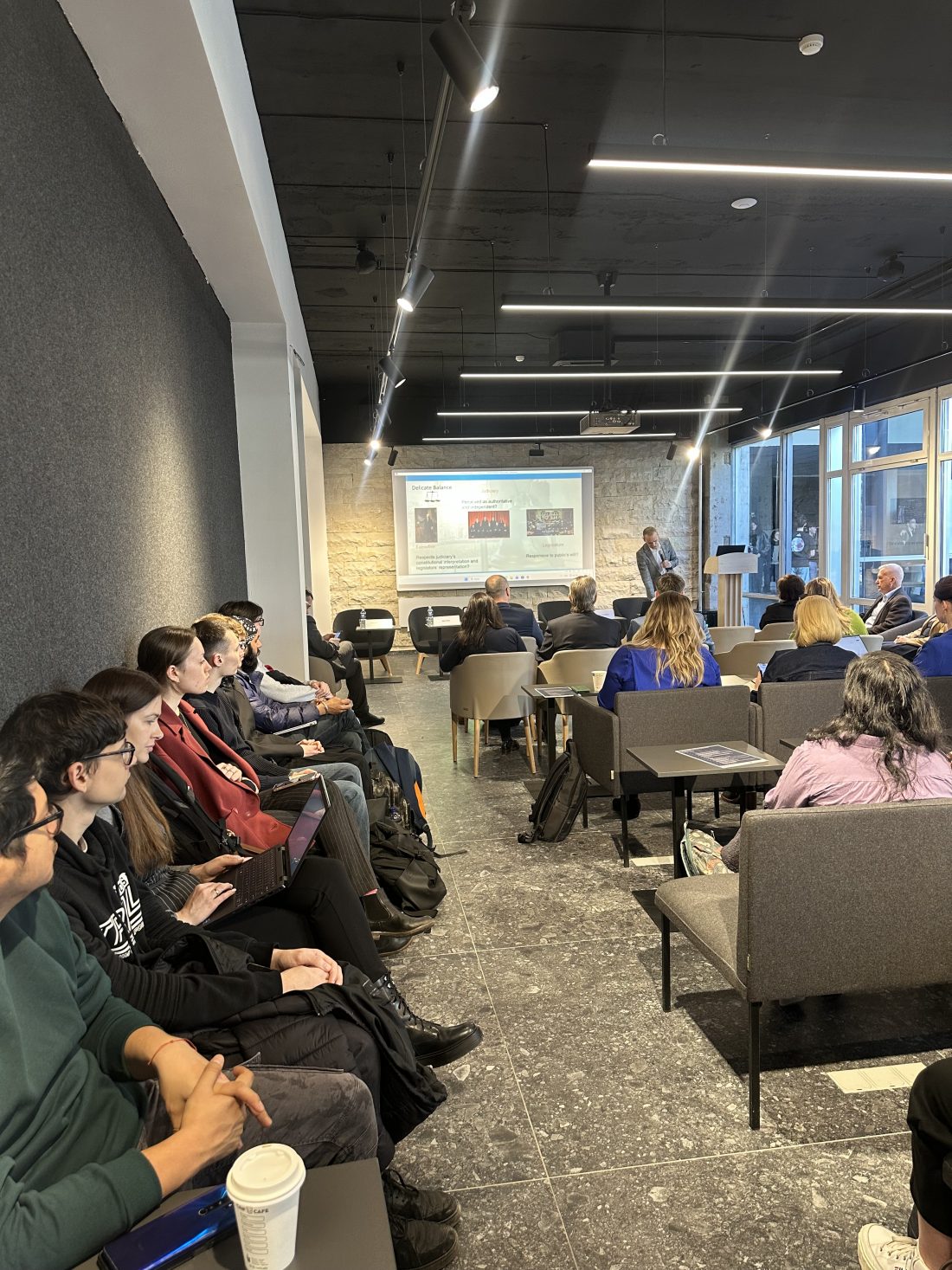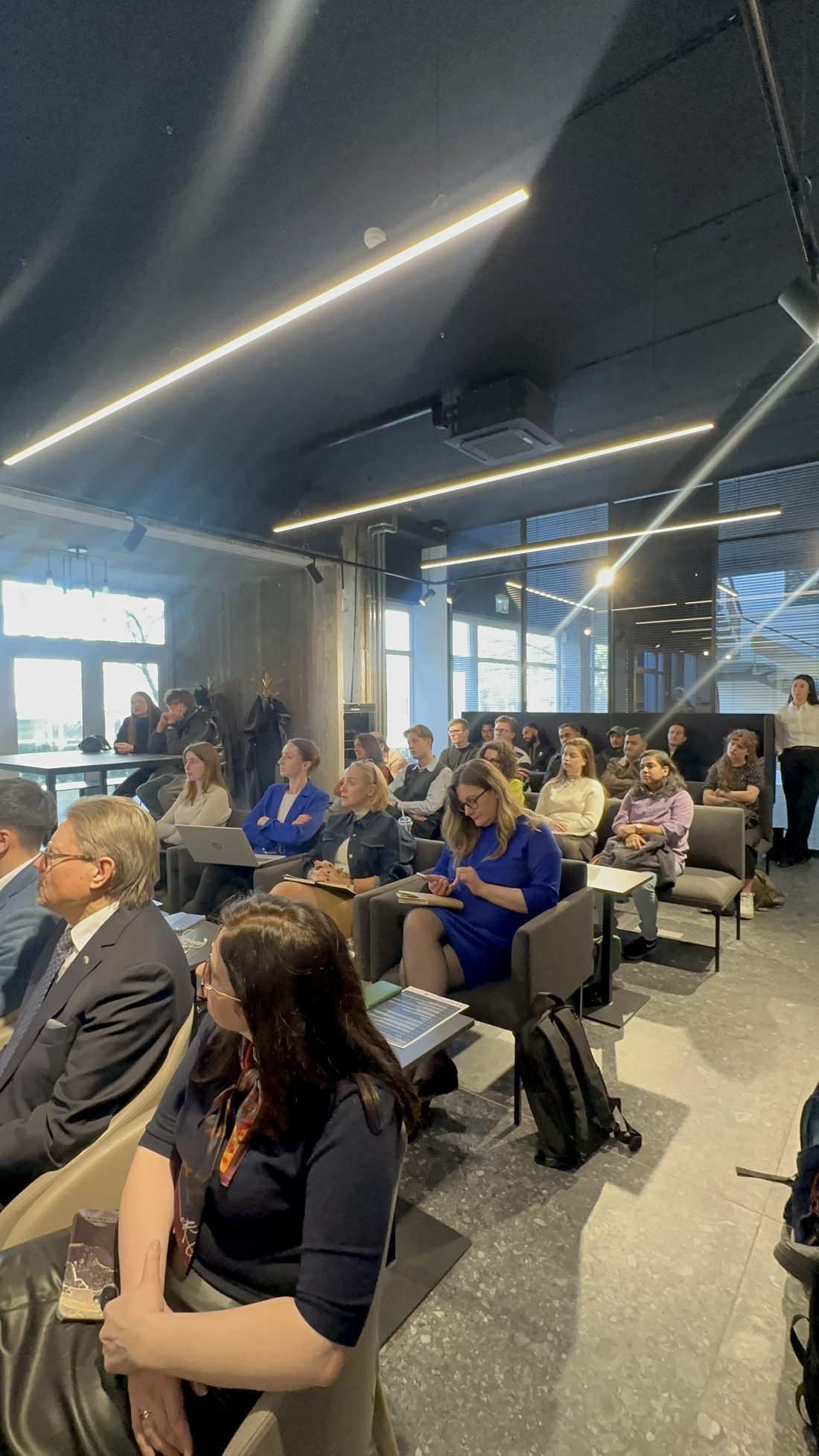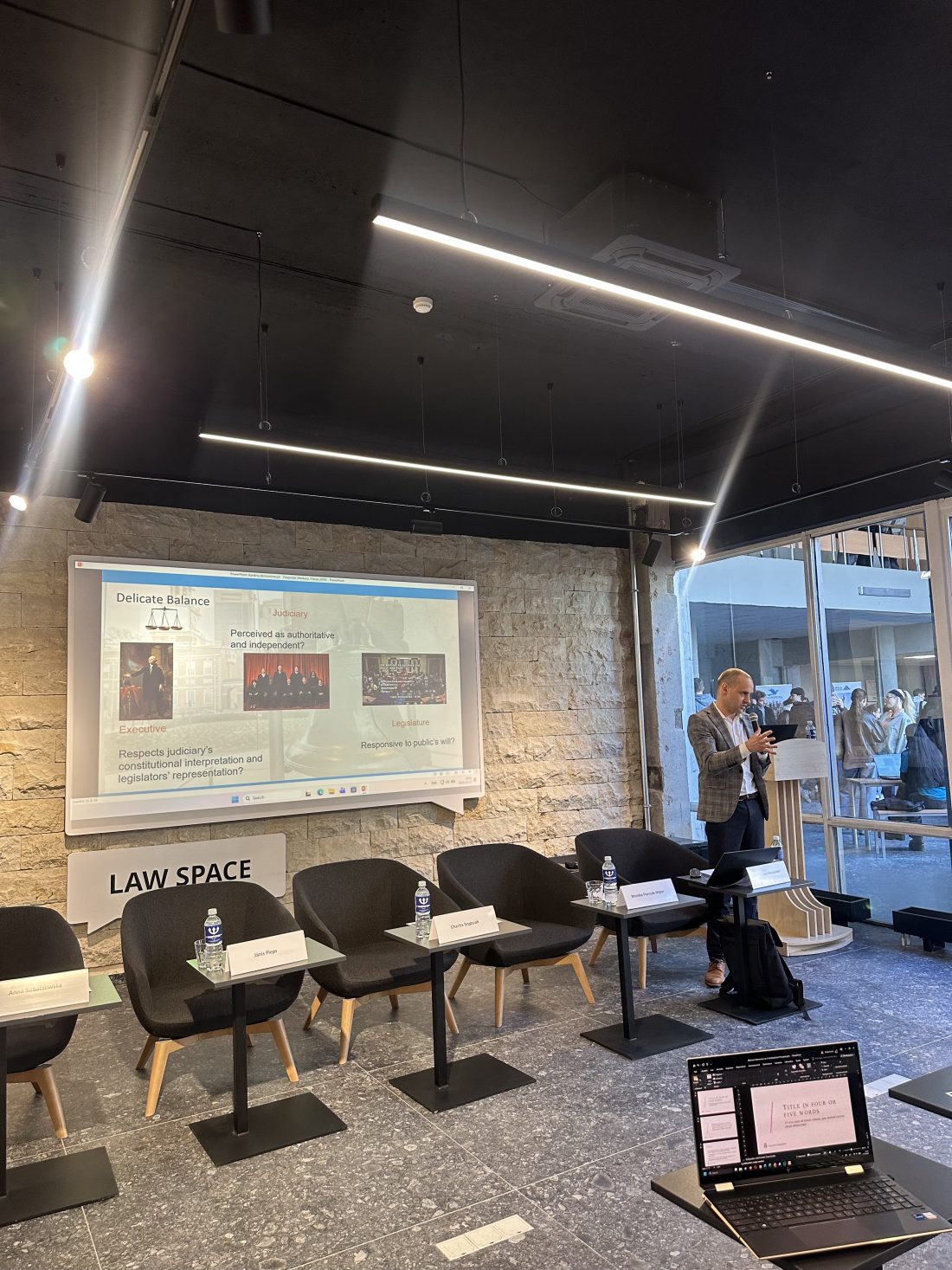


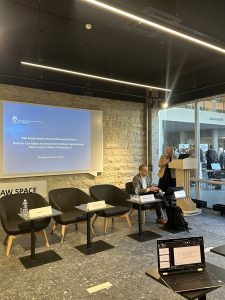
On 17 March 2026, the Faculty of Law at Vilnius University hosted the international conference “Constitutional Resilience: Comparative Insights”, dedicated to addressing the growing pressures faced by democratic states due to both internal and external hostile forces. The conference marked one of the first attempts to bring together regional scholars to jointly examine this issue. Researchers from all Baltic states, Poland, Ireland, and the United States took part in the event. Opening remarks were delivered by the incoming Dean of the Faculty of Law, Vice-Dean Prof. Vigita Vėbraitė.
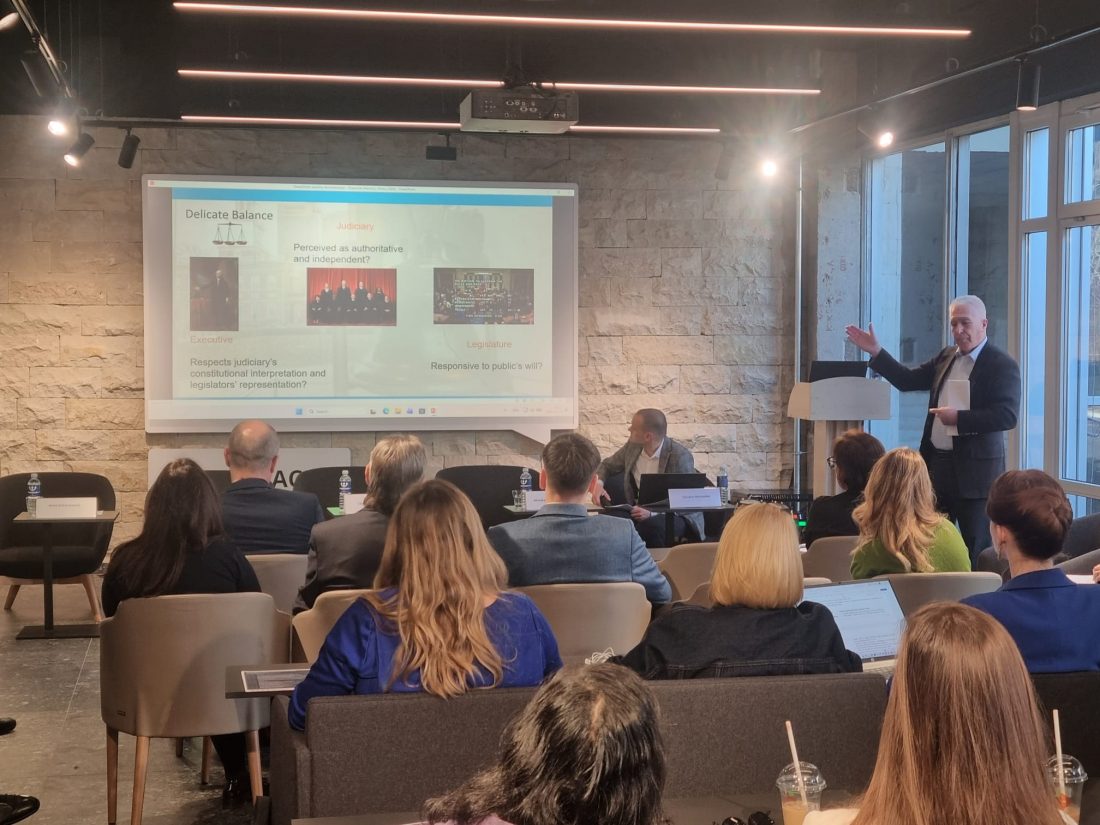
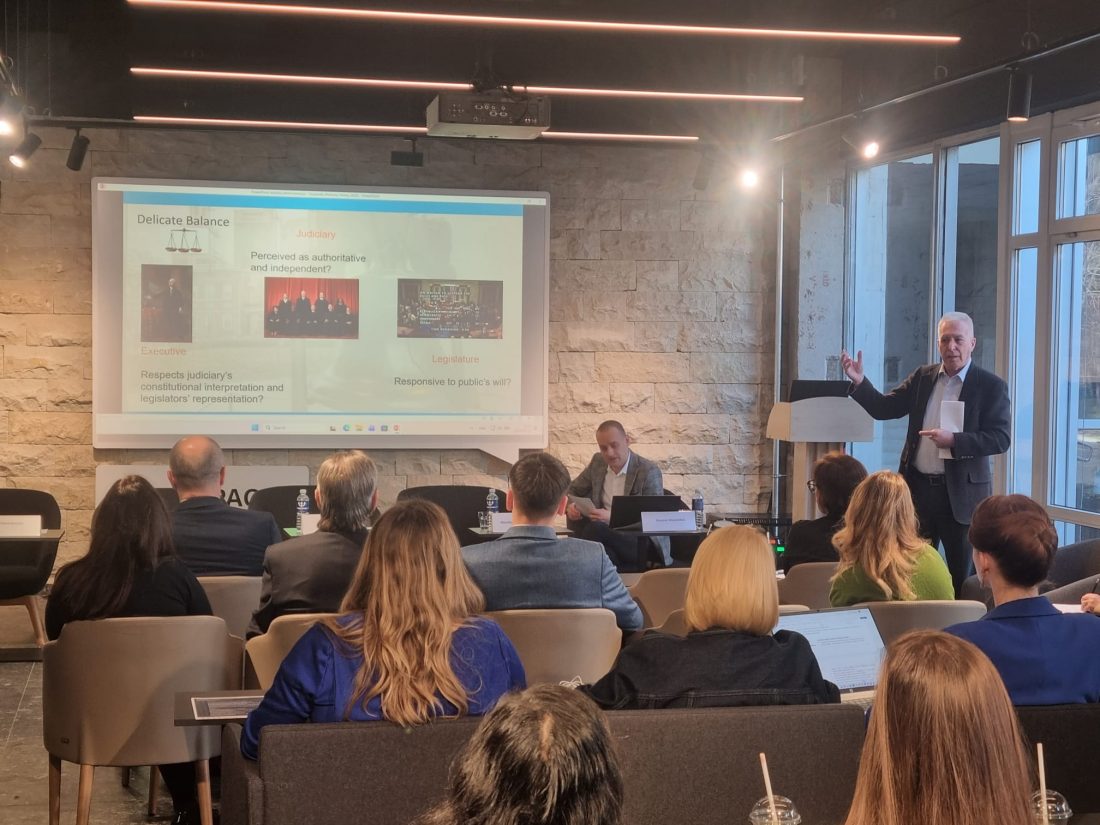
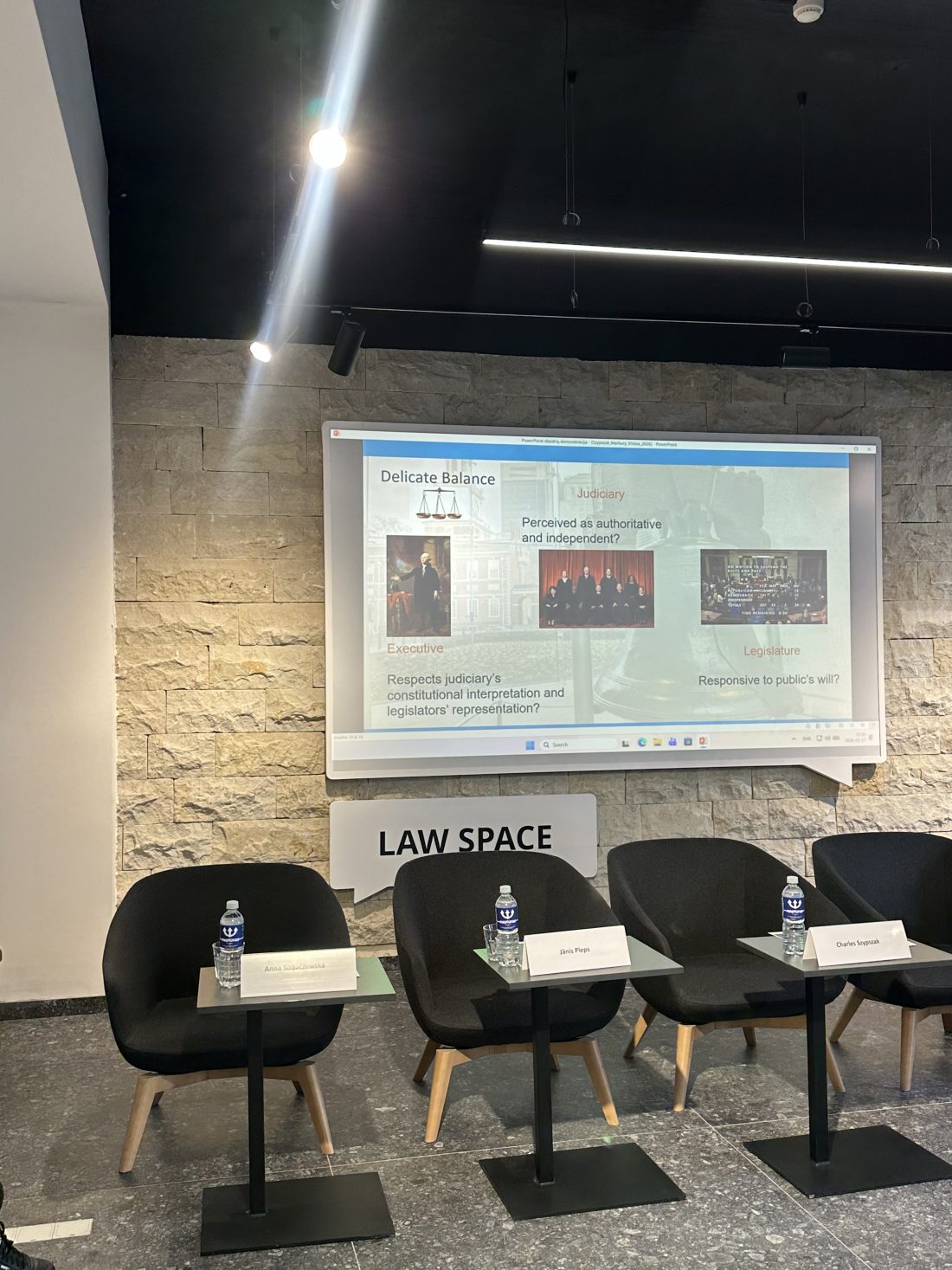
Professor Charles Szypszak of the University of North Carolina opened the conference by discussing how the 1803 U.S. Supreme Court decision in Marbury v. Madison continues to serve as a pillar of constitutional resilience, particularly as recent executive actions by the President have tested the boundaries of the rule of law.
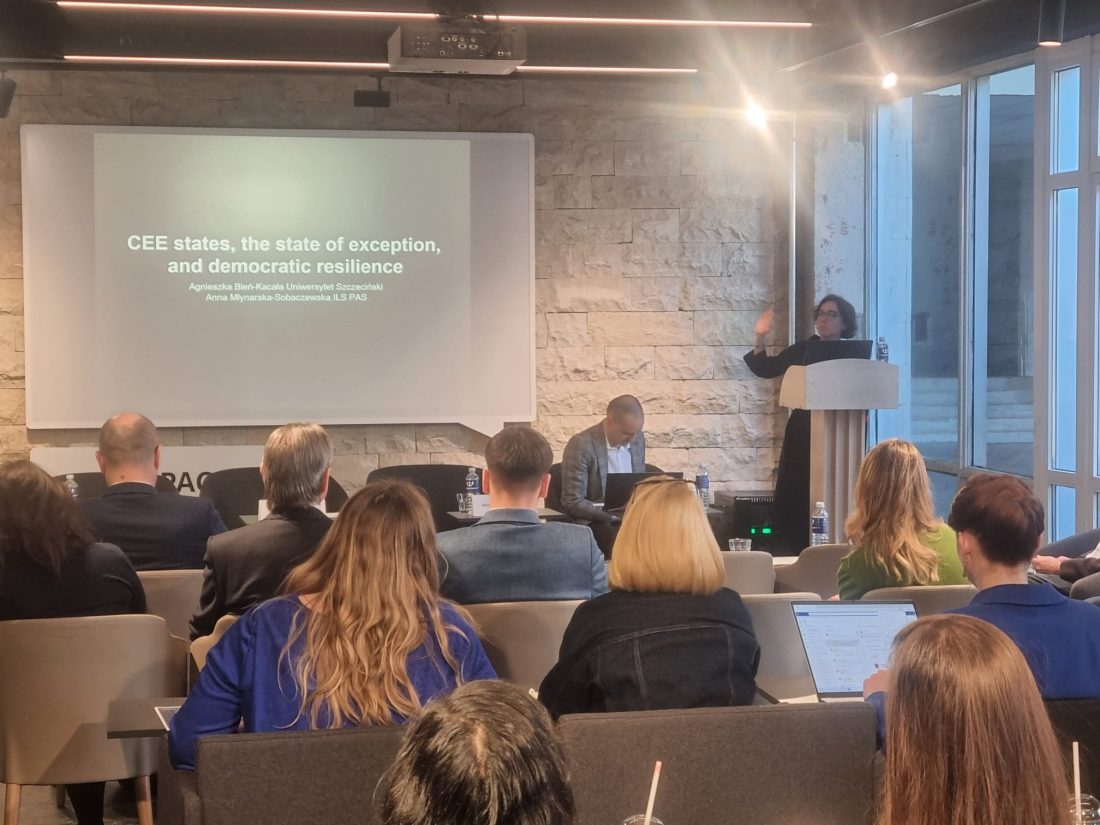
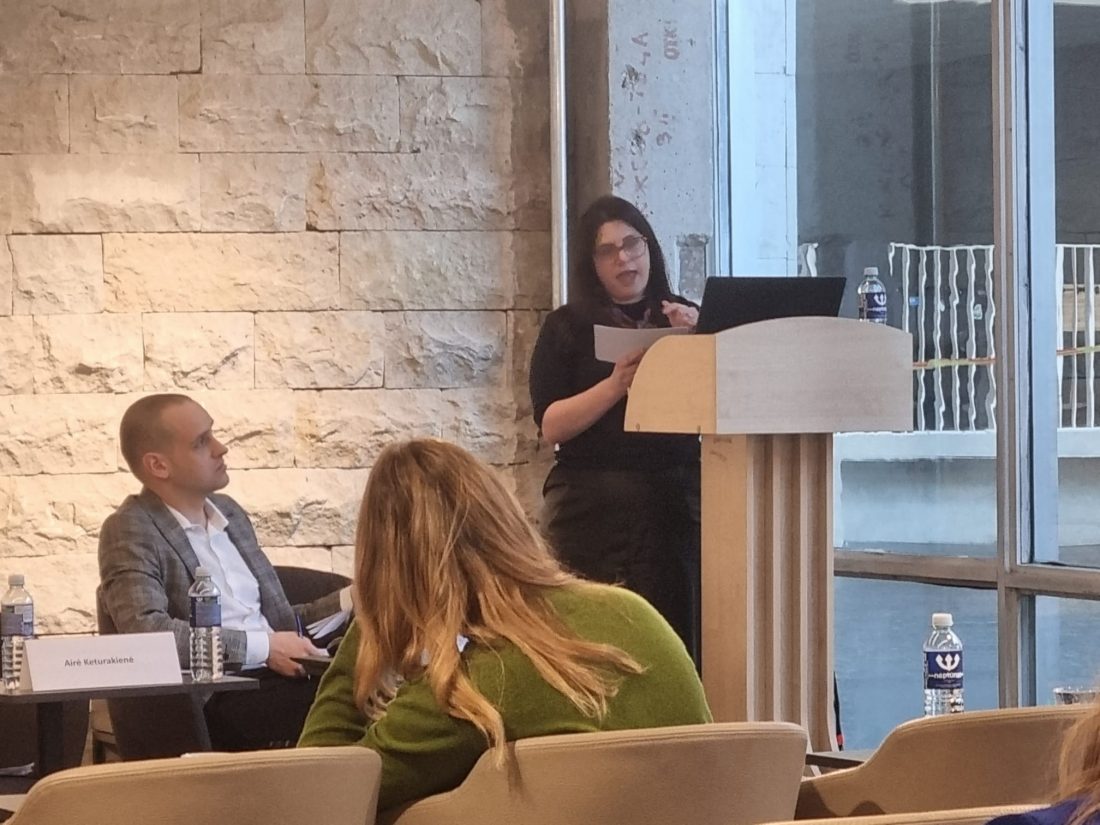
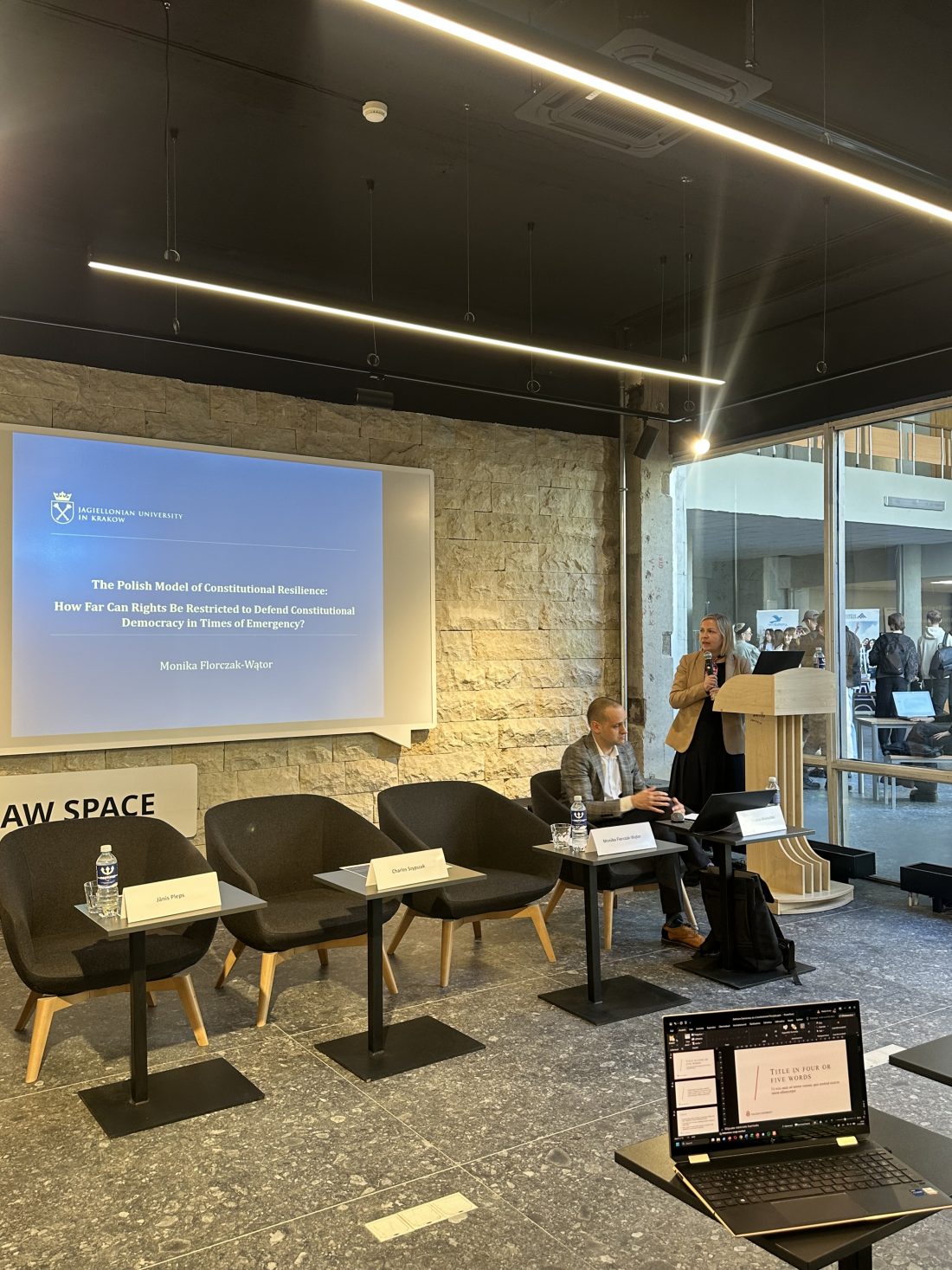
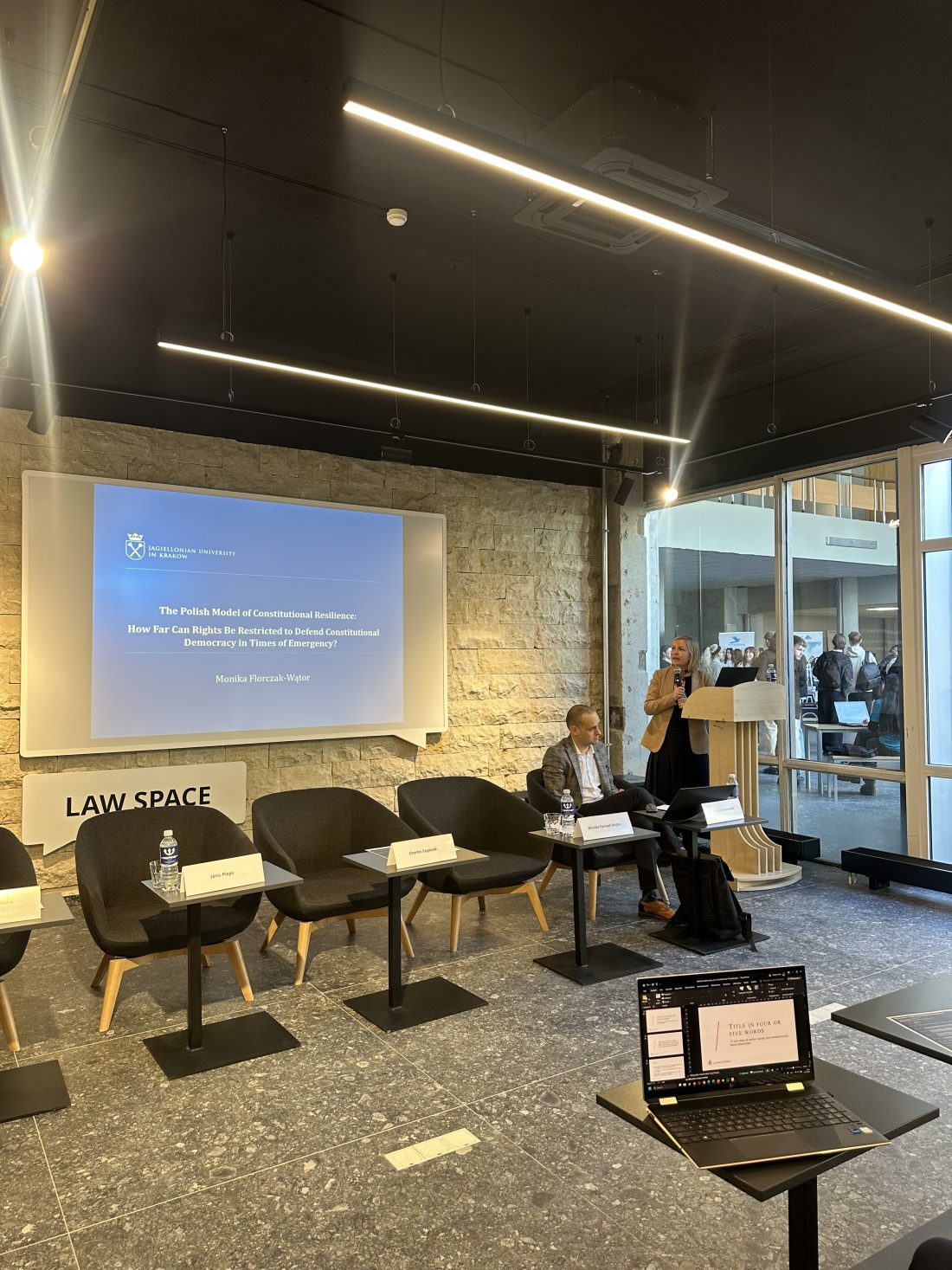
Monika Florczak-Wątor from the Jagiellonian University in Kraków presented a taxonomy of Poland’s special legal regimes, highlighting the lack of oversight in both their adoption and implementation. The issue of special legal regimes was further explored by Ana Sobaczewska of the Institute of Law at the Polish Academy of Sciences, who presented a joint study with Agnieszka Bień-Kacała (University of Szczecin), comparing the characteristics of such regimes across Central and Eastern European countries between 2015 and 2025. In this context, she drew attention to the well-reasoned ruling of the Constitutional Court of the Republic of Lithuania of 7 June 2023 concerning the temporary accommodation of an asylum seeker.
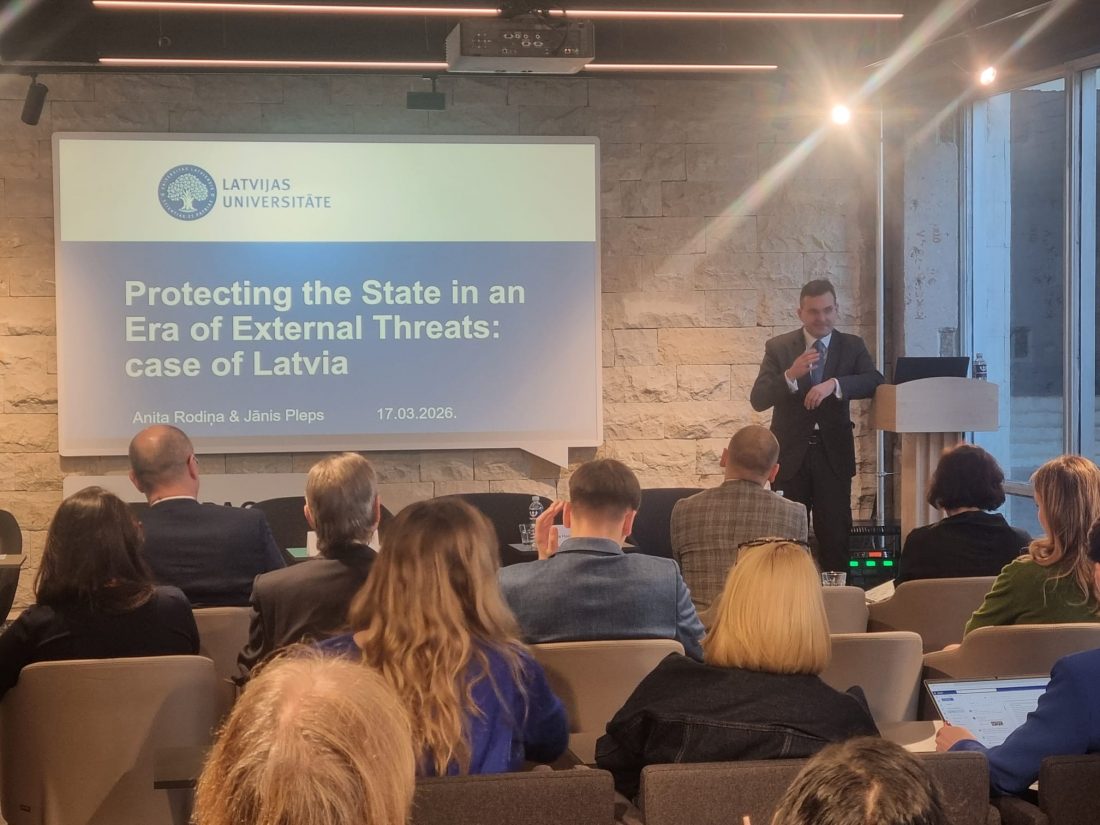
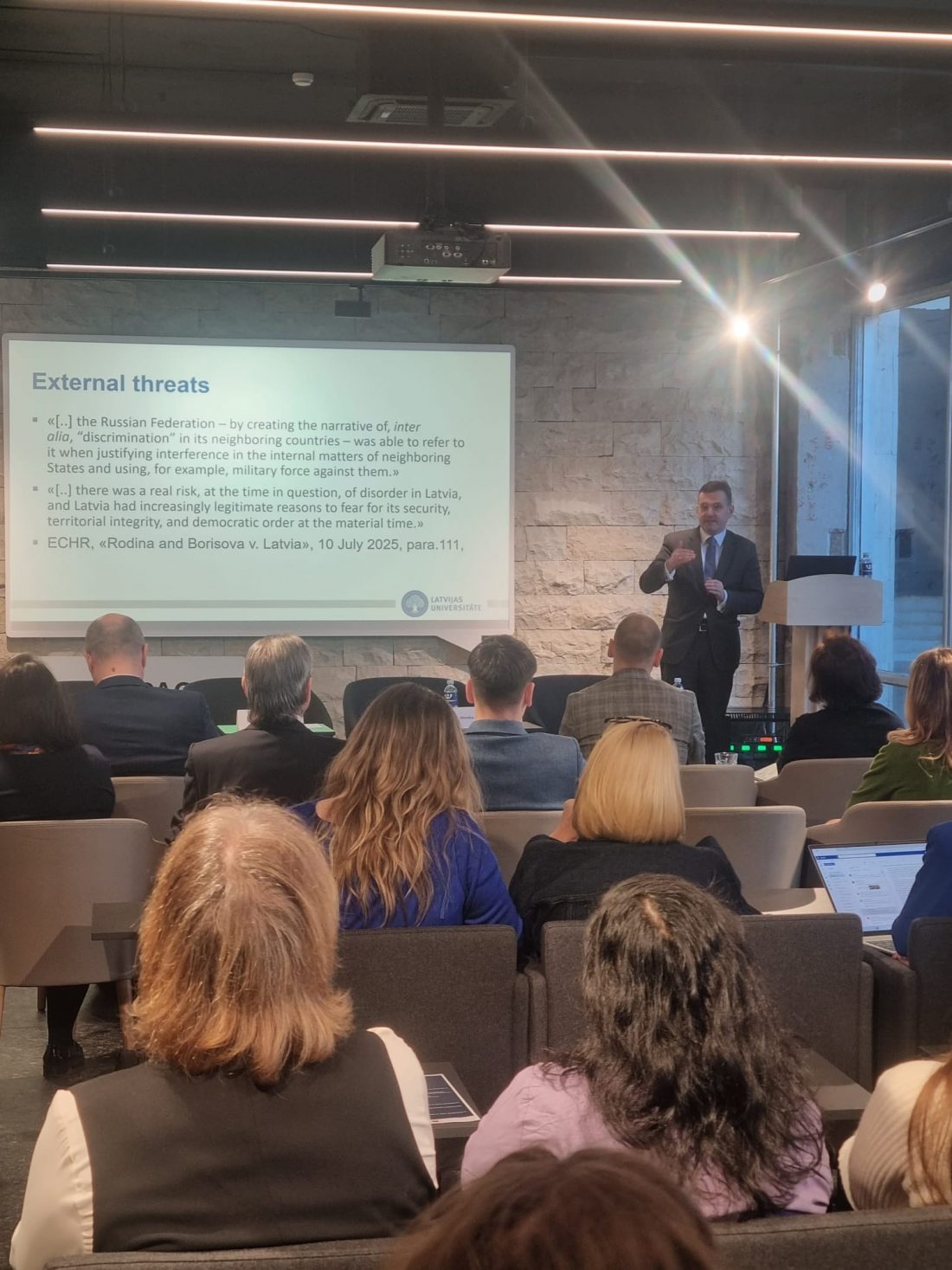
Professor Jānis Pleps of the University of Latvia presented joint research with Anita Rodiņa (Constitutional Court of Latvia) on legal measures employed by the Latvian state in response to external threats, with particular emphasis on amendments to Latvia’s National Security Law that reflect current geopolitical tensions.
Madis Ernits (University of Tallinn) examined the concept of a “militant democracy” as reflected in Estonian constitutional law, emphasizing the importance of high-quality legal education and of lawyers who understand and uphold the principles of the rule of law. Beatričė Mončiuskaitė, a researcher at the University of Dublin (Ireland), shared insights from her forthcoming book, which methodologically analyzes liberal constitutional democracy in the Baltic states.
Airė Keturakienė of Vytautas Magnus University highlighted the division of competences between the European Union and national states in addressing threats to the constitutional order, raising the question of when it is justified for the EU to intervene in national affairs in the face of threats to democratic governance.
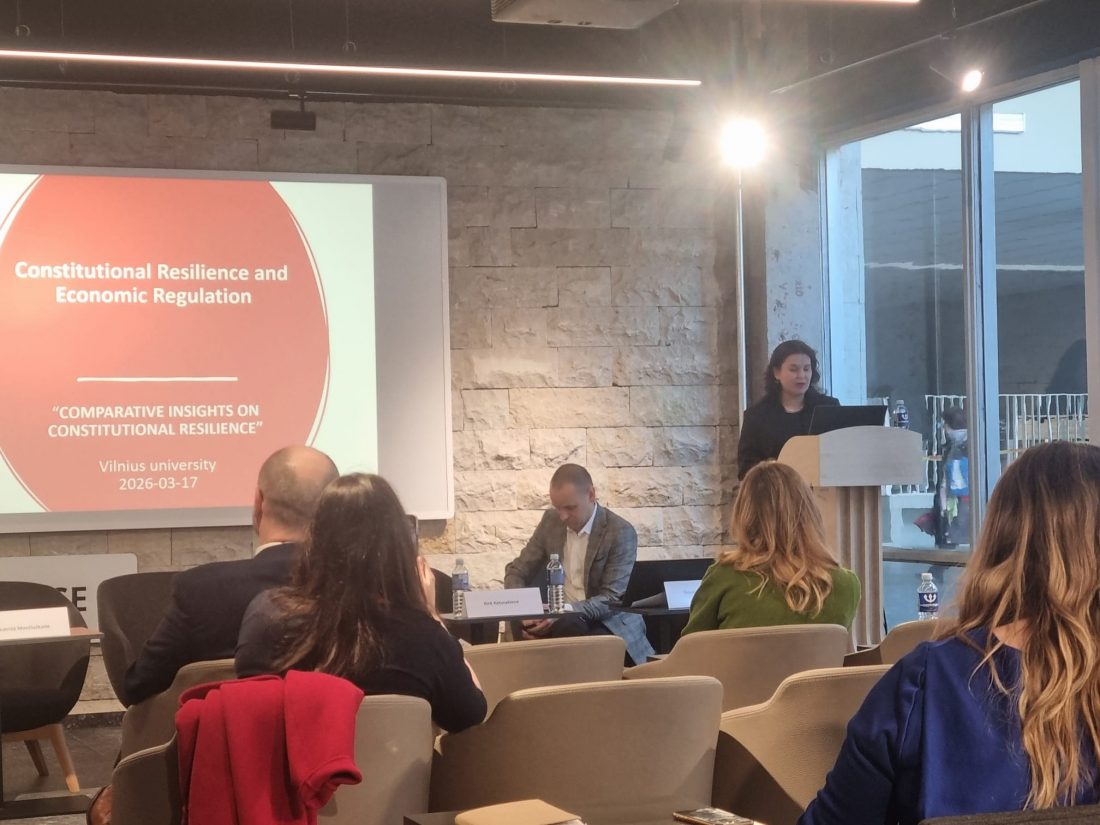
Assoc. Prof. Agnė Juškevičiūtė-Vilienė of the Faculty of Law at Vilnius University reviewed Lithuania’s constitutional doctrine in economic matters as a distinct case of constitutional resilience, emphasizing different stages of the Constitutional Court’s economic jurisprudence that contribute to ensuring national security. The event concluded with a presentation by its moderator, Assoc. Prof. Donatas Murauskas of the same faculty, who introduced ongoing research aimed at substantiating the recognition of the public broadcaster as a constitutional institution in the Baltic states, highlighting its role in strengthening societal resilience and enhancing national security with minimal interference in human rights.
“The event not only brought together leading constitutional law scholars from across the region, but will also contribute to a scientific discourse on constitutional resilience that is of particular importance to our states at this moment. There is no longer time to reflect at length—given today’s threats, these questions must be answered now,” emphasized the moderator of the event, Assoc. Prof. Donatas Murauskas.
The research presented at the conference will be published in a special issue of the Baltic Journal of Law & Politics.
The event was organized by Assoc. Prof. Donatas Murauskas, Assoc. Prof. Agnė Juškevičiūtė-Vilienė, and Assoc. Prof. Justyna Levon. It forms part of the Baltic-American Freedom Foundation (BAFF) programme and is funded by the Foundation. More information about BAFF scholarships and lecturer support can be found at: www.balticamericanfreedomfoundation.org.