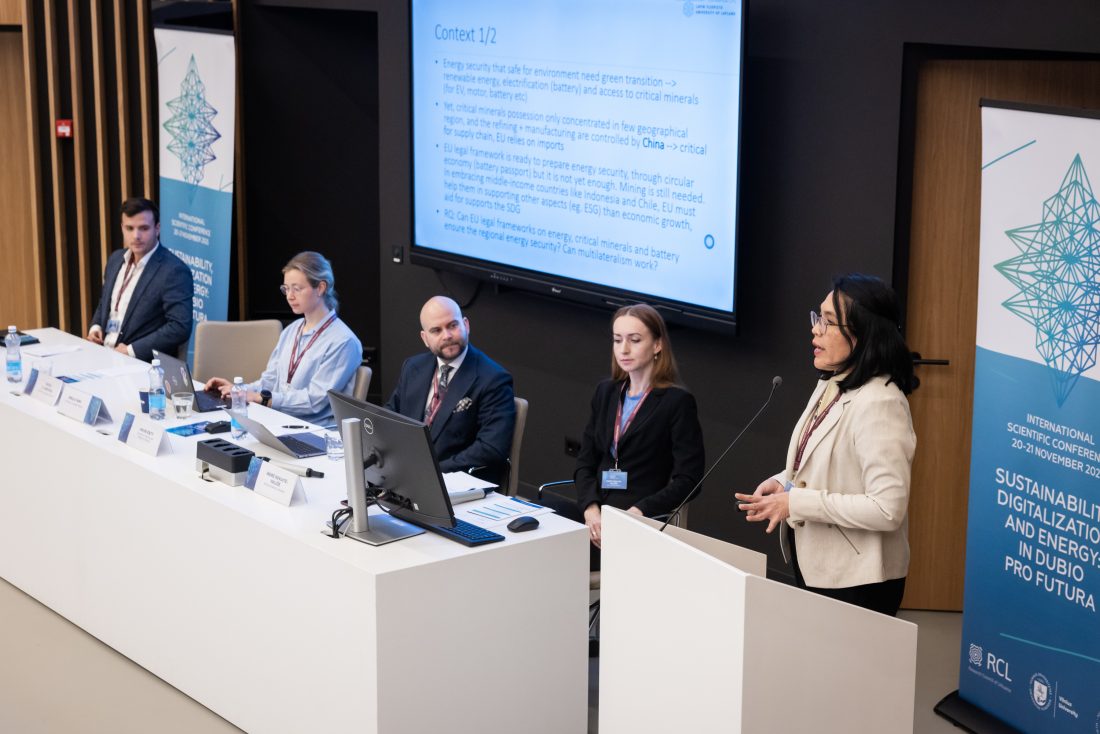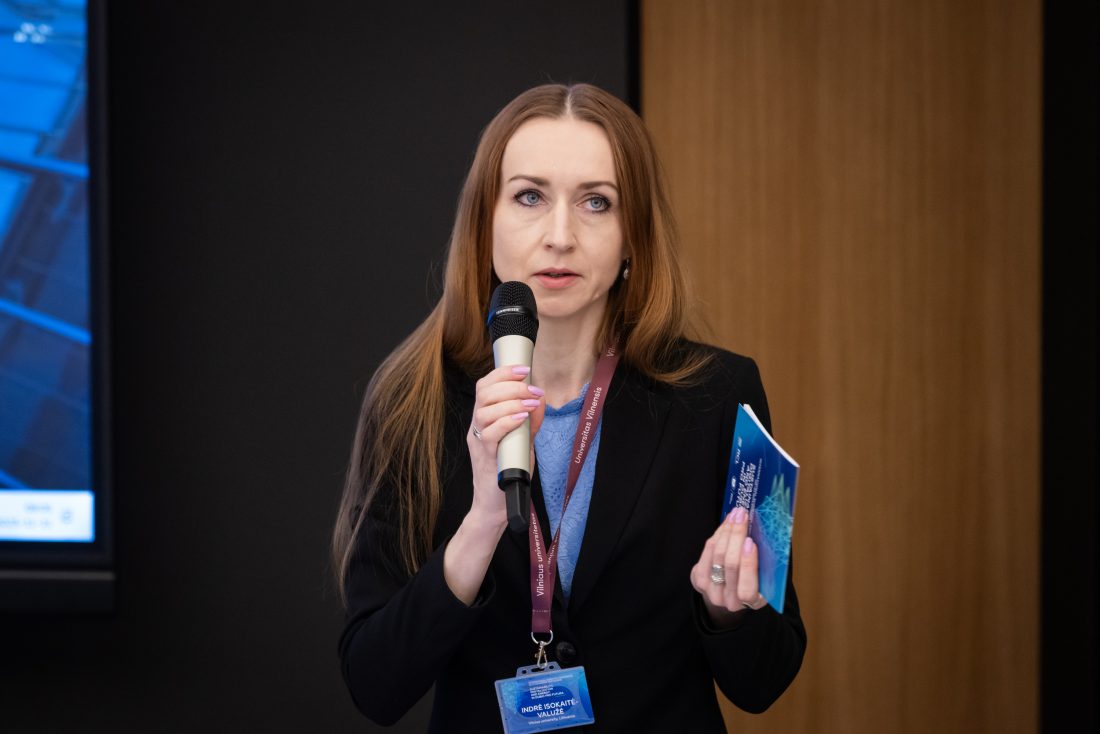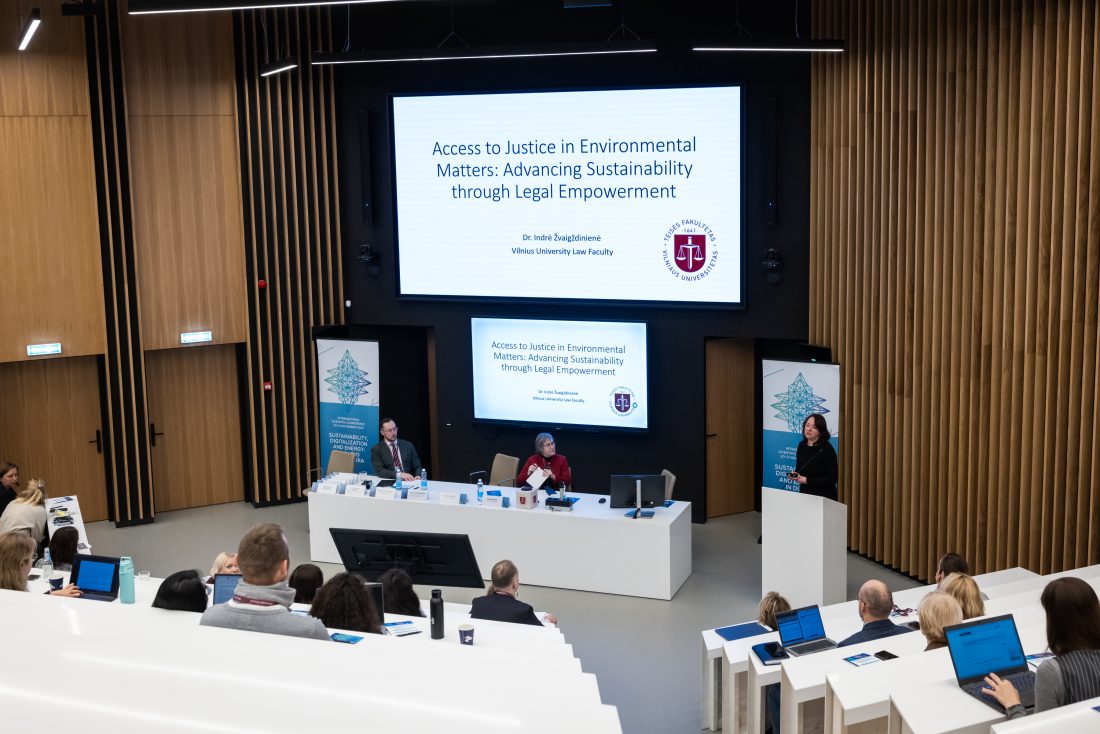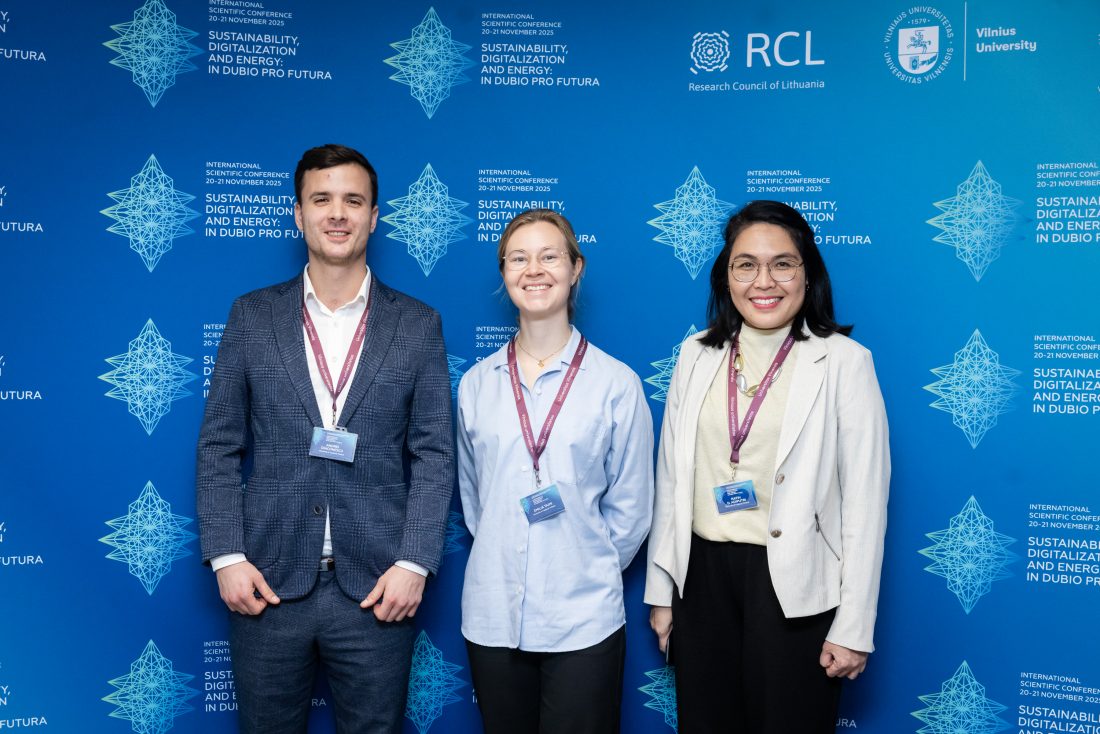


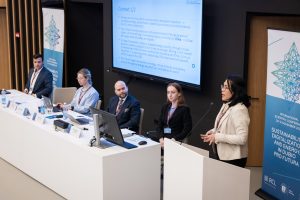
On November 20–21, the Faculty of Law at Vilnius University (VU) held discussions on the creation of sustainable innovations and the growing digitalization, as well as an analysis of the role of law in these processes. Experts from eight countries shared their insights at the international scientific conference “Sustainability, Digitalization, and Energy: In Dubio Pro Futura.”
The event aimed to search for solutions important for the future. “‘In Dubio Pro Futura’ is not just a beautiful phrase. It is an invitation and a commitment: when in doubt, choose the future,” said the Dean of the Faculty of Law, Prof. Dr. Haroldas Šinkūnas, opening the event.
The starting point for the discussions was the interaction between law, technology, and environmental protection. “It reminds us that every decision in the field of energy policy involves maintaining a delicate balance between equally important values—security, efficiency, and environmental responsibility,” noted the Vice-Dean for Research, Prof. Dr. Jurgita Paužaitė-Kulvinskienė.
Renewable Energy — Not Only Advantages
Climate change, pollution, and biodiversity loss are creating a triple crisis on our planet. Solutions are being sought through digitalization tools and the development of renewable energy.
However, not everything is so simple—even this kind of energy causes harm to nature, notes University of Coimbra Faculty of Law Professor and United Nations (UN) Sustainable Development Goals (SDG) Ambassador Alexandra Aragão. Wind turbines disrupt navigation, while the construction of hydroelectric power plants—flooding large areas with water—destroys natural ecosystems.
“We must have clear guidelines on how to move away from an unsustainable situation,” the expert asserts. A rarely mentioned field of science—transitology, which examines how economies and politics transition from one system to another—is crucial for this change.
Among the measures frequently cited for creating a sustainable future is the development of new technologies. According to the professor, a different kind of caution is needed—stop solving old problems with new things. Some challenges could be overcome simply by stopping and ceasing certain activities. An example of this is the COVID-19 pandemic period, during which environmental pollution significantly decreased because people worked from home and transportation flows slowed down.
Prof. Aragão proposes another solution—reconsidering the relationship with nature and its rights, granting it an important legal status that would protect it from further destruction.
Digitalization in Courts — Greater Opportunities and New Challenges
What could more sustainable access to courts look like? This question is raised by VU Faculty of Law PhD candidate and lecturer Goda Strikaitė-Latušinskaja. The answer involves greater inclusion and broader opportunities to participate in court proceedings.
There are four aspects significant to court accessibility: geographical location, finances, information, and technologies. By using court information systems, e-assistance portals, conducting remote hearings, and implementing asynchronous court proceedings, it is possible to provide people with better access to justice. This is particularly important for people with disabilities, those living far from the court, and individuals with lower incomes.
However, Dr. Strikaitė-Latušinskaja emphasizes that new risks emerge here as well. Differences in technological skills and the lack of financial resources to purchase quality equipment may lead to inequality. Other risks include miscommunication caused by technical issues, cybersecurity challenges, and threats to sensitive information.
The lecturer suggests that digital tools should be used in parallel with traditional ones. New challenges can be addressed by employing digital assistants and strengthening digital literacy. It is especially important to use robust cybersecurity technologies.

Is Legal Regulation Supportive of Innovation?
When implementing innovations that could help address climate change, one encounters institutional caution and bureaucratic obstacles, notes Florentin Blanc, Director of the European Public Law Organization’s Institute for Regulatory Innovation, Implementation and Effectiveness (EPLO-IRIDE).
The specialist gives an example of the different attitudes toward petroleum fuels and hydrogen fuel. It is much easier to create infrastructure for petroleum fuel production because there are fewer legal barriers. Potential negative impacts were not considered in the past when such fuels were first introduced. It is different with hydrogen fuel, where great caution is exercised, and risks are feared. Blanc criticizes this approach, arguing that the desire to control everything leads to failure.
In the implementation of energy innovations, support is needed not only from institutions but also from society. When planning the development of facilities that use renewable energy, public resistance is often encountered. According to Blanc, power plants should share profits with local residents. “If this is not done, then it is no surprise why people oppose the creation of new energy infrastructures,” he says.
The conference is part of the project “Accelerating the Legal System to Promote the Transition to Renewable Energy Sources – in dubio pro futura,” funded by the Research Council of Lithuania (LMTLT), Agreement No. S-PD-24-85.