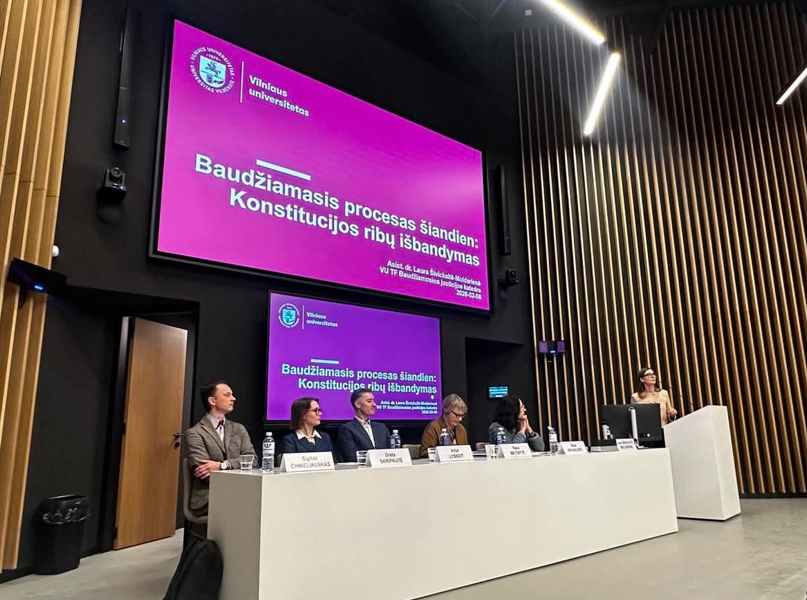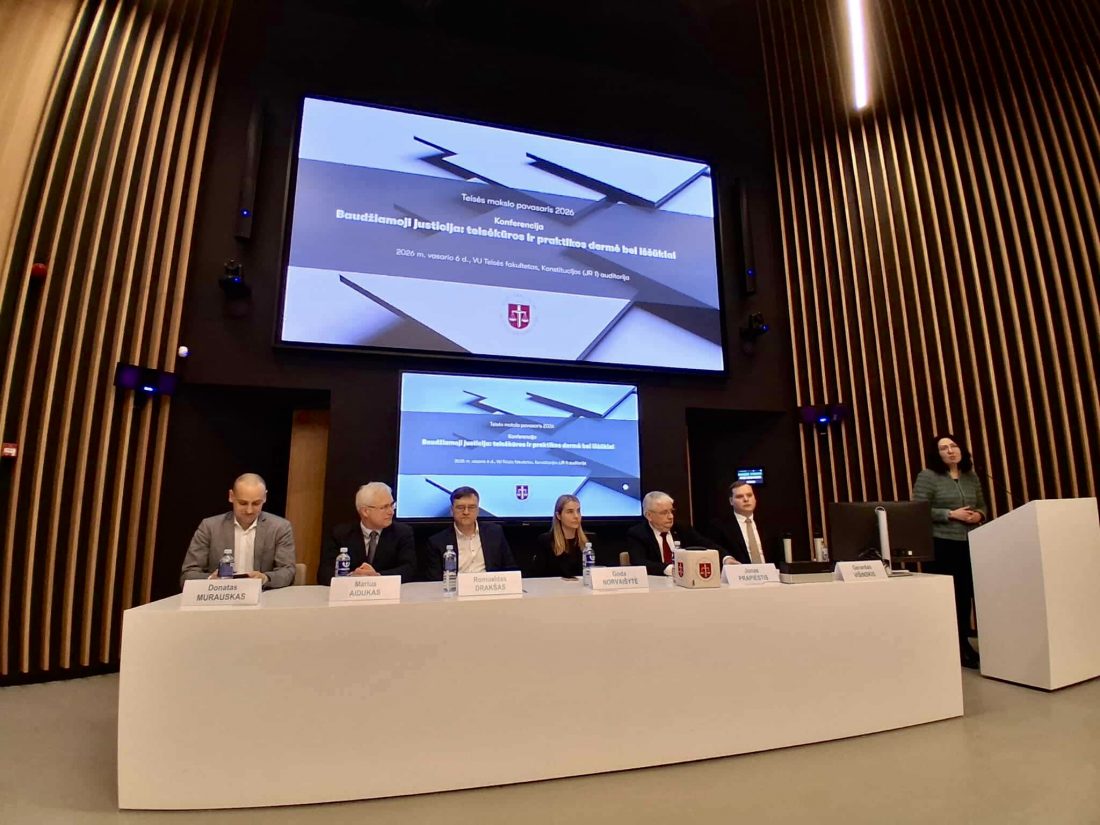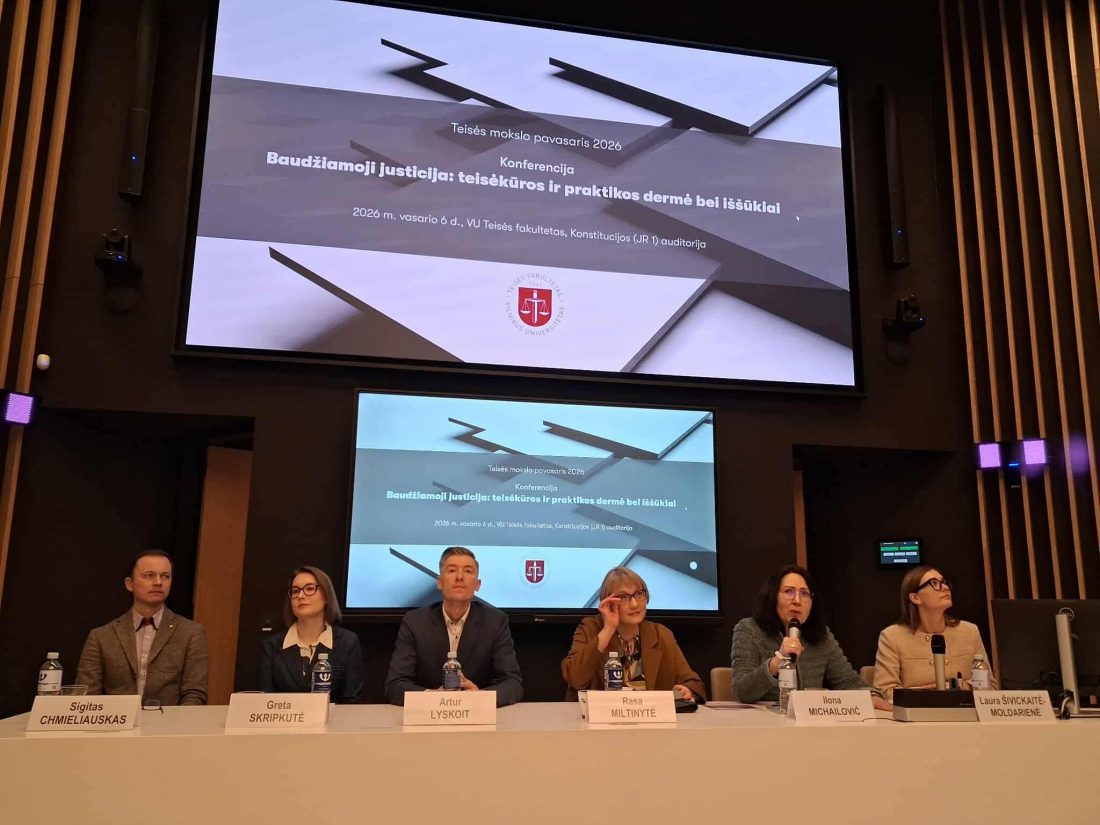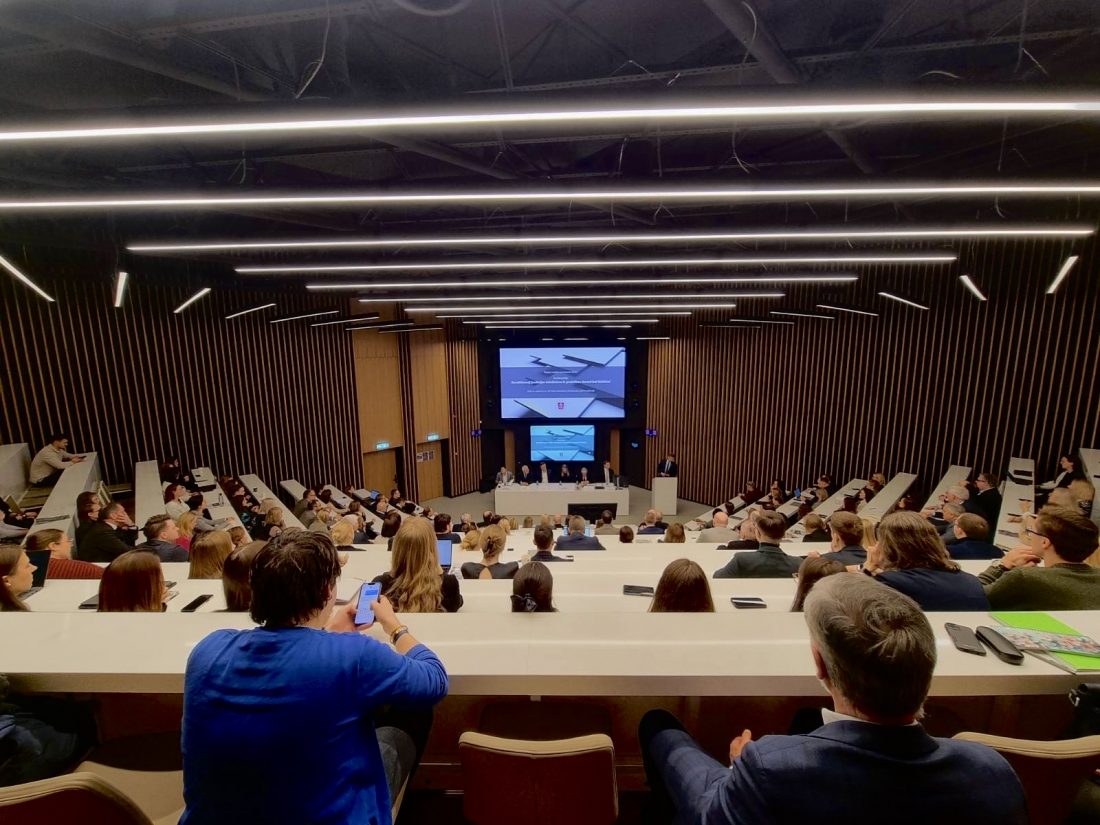


The already traditional 14th Spring Conference of Law Science, “Criminal Justice: The Coherence and Challenges of Lawmaking and Practice,” organised this year by the Department of Criminal Justice, marked the beginning of the spring semester at the Faculty of Law of Vilnius University. On the 5th of February, a pre-conference for students and doctoral candidates took place, followed by the main academic and practical conference on the 6th of February.
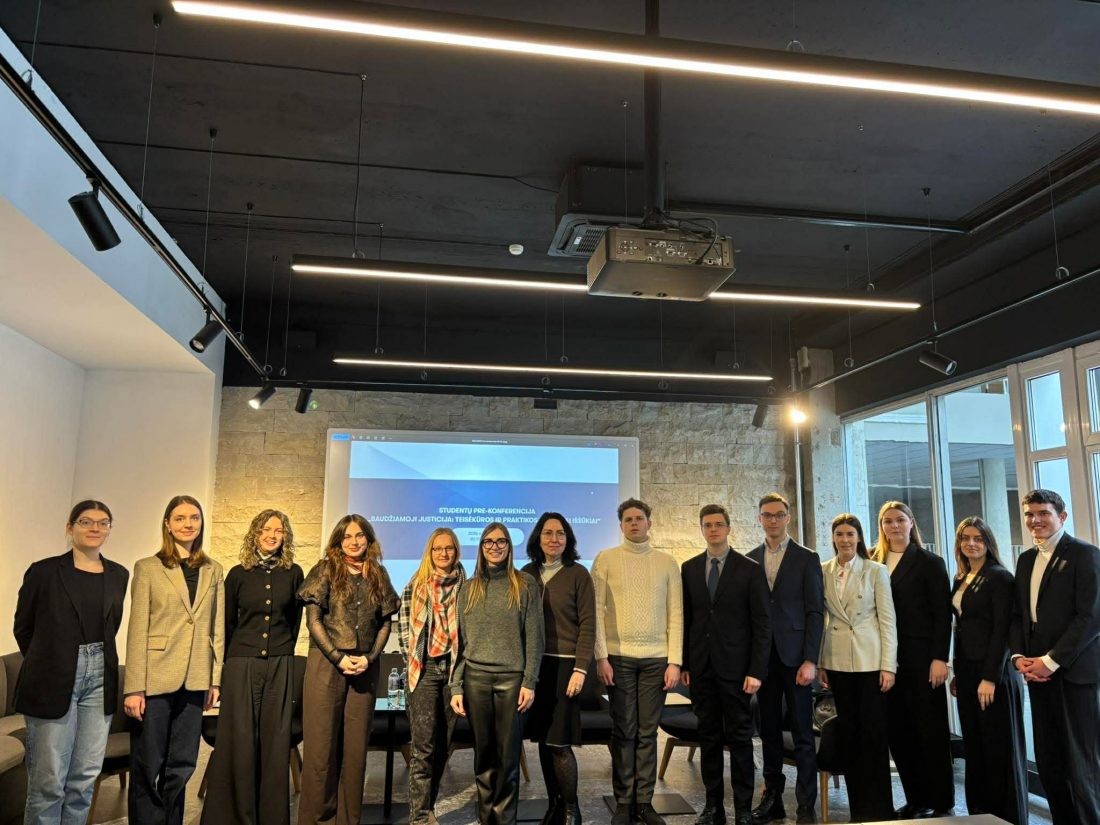
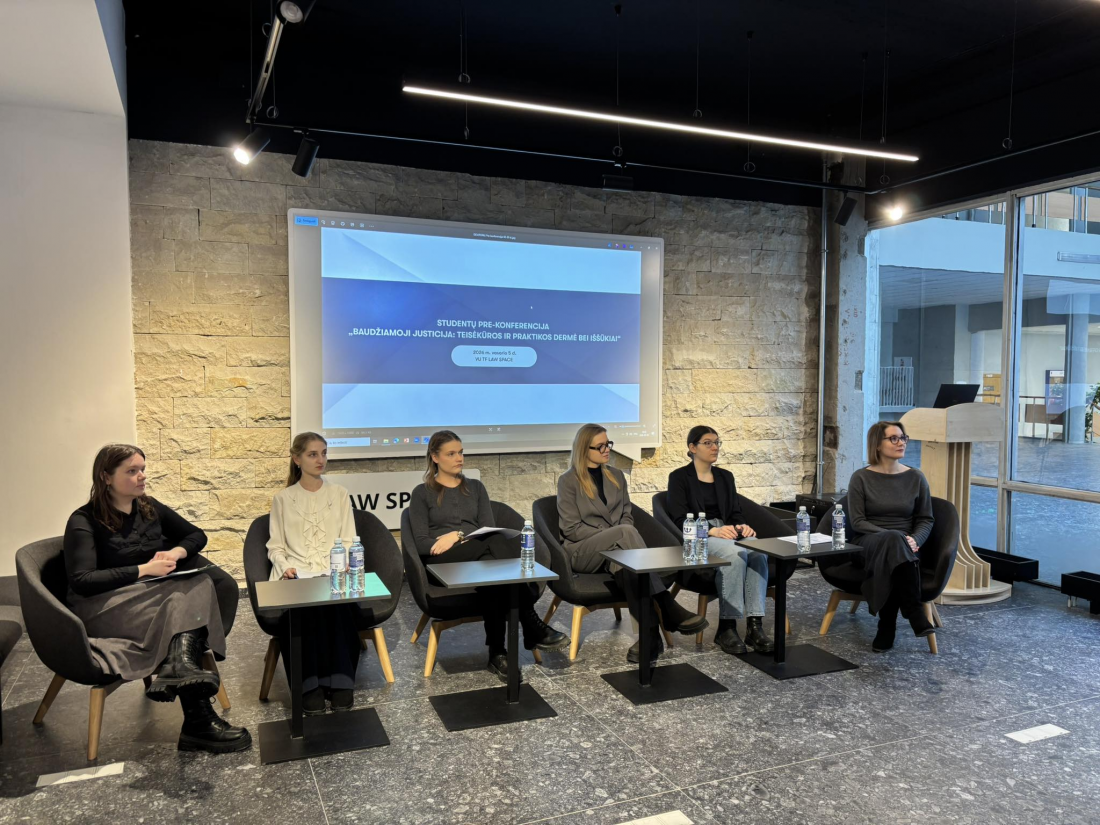
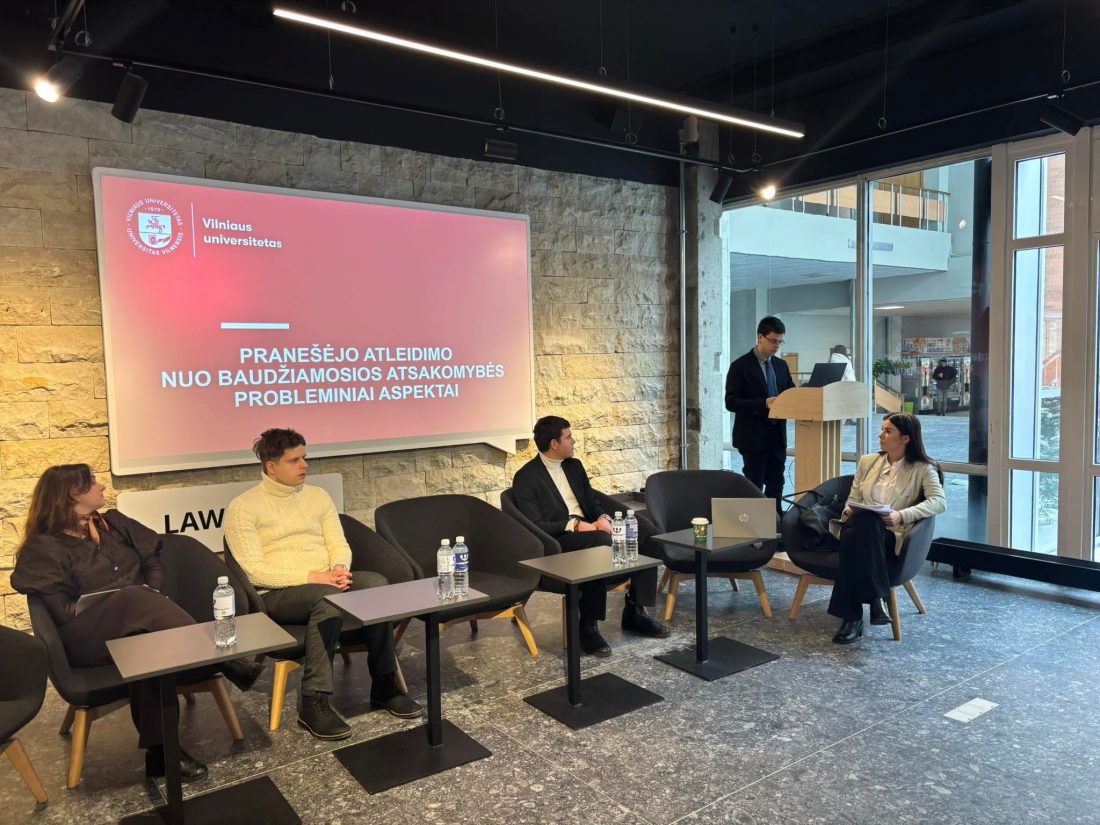
On 5 February, the Faculty of Law invited students to the first student pre-conference organised by the Department of Criminal Justice, aimed at young researchers seeking an academic career or wishing to present topical legal issues. The Vice-Dean for Research, Prof. Dr. Jurgita Paužaitė-Kulvinskienė, and the Head of the Department of Criminal Justice, Assoc. Prof. Dr. Ilona Michailovič.
During the pre-conference, doctoral candidates and law students of the Faculty of Law (and one psychology student!) delivered 12 presentations. Miglė Bernatonytė and Greta Tilvikaitė presented an interdisciplinary approach to incitement to suicide in the context of Article 133 of the Criminal Code; Laura Palubinskytė explored when a healthcare professional becomes a criminal offender; Smiltė Dzimidavičiūtė analysed the criminalisation of AI-generated pornographic content; doctoral candidate Gerda Klimaitė discussed identity theft and the need for its criminalisation; Simona Maksimec and Simona Zubkovaitė, drawing on the case law of the ECtHR and the Supreme Court of Lithuania, examined judicial impartiality in criminal proceedings; Austėja Bareišytė and Gabija Vaškevičiūtė analysed the intersection of human rights and procedural coercion; Medeinė Marcinkevičiūtė raised the question of whether a forensic expert can be considered an informal judge; doctoral candidate Danielius Jasiulevičius reviewed the origins and substance of the civil claim in criminal proceedings; Ugnė Gabrielė Motiekaitytė shared insights into the concept of restorative justice and its possibilities of application in Lithuania; Rokas Damulis discussed the challenges of integrating artificial intelligence into criminal justice in the context of a growing digital generation of lawyers; doctoral candidate Ignas Gagas addressed issues related to the exemption of whistleblowers from criminal liability; and doctoral candidate Vidas Krušinskas guided participants through the conceptual labyrinth of recidivism, where, in his words, it becomes unclear who qualifies as a recidivist and what the significance of this concept actually is. The event and discussions were moderated by lecturers of the Department of Criminal Justice: Assoc. Prof. Dr. Justyna Levon, Assist. Prof. Dr. Laura Šivickaitė-Moldarienė and doctoral candidate Greta Skripkutė. We thank the doctoral candidates and students for their curiosity and willingness to share their ideas.
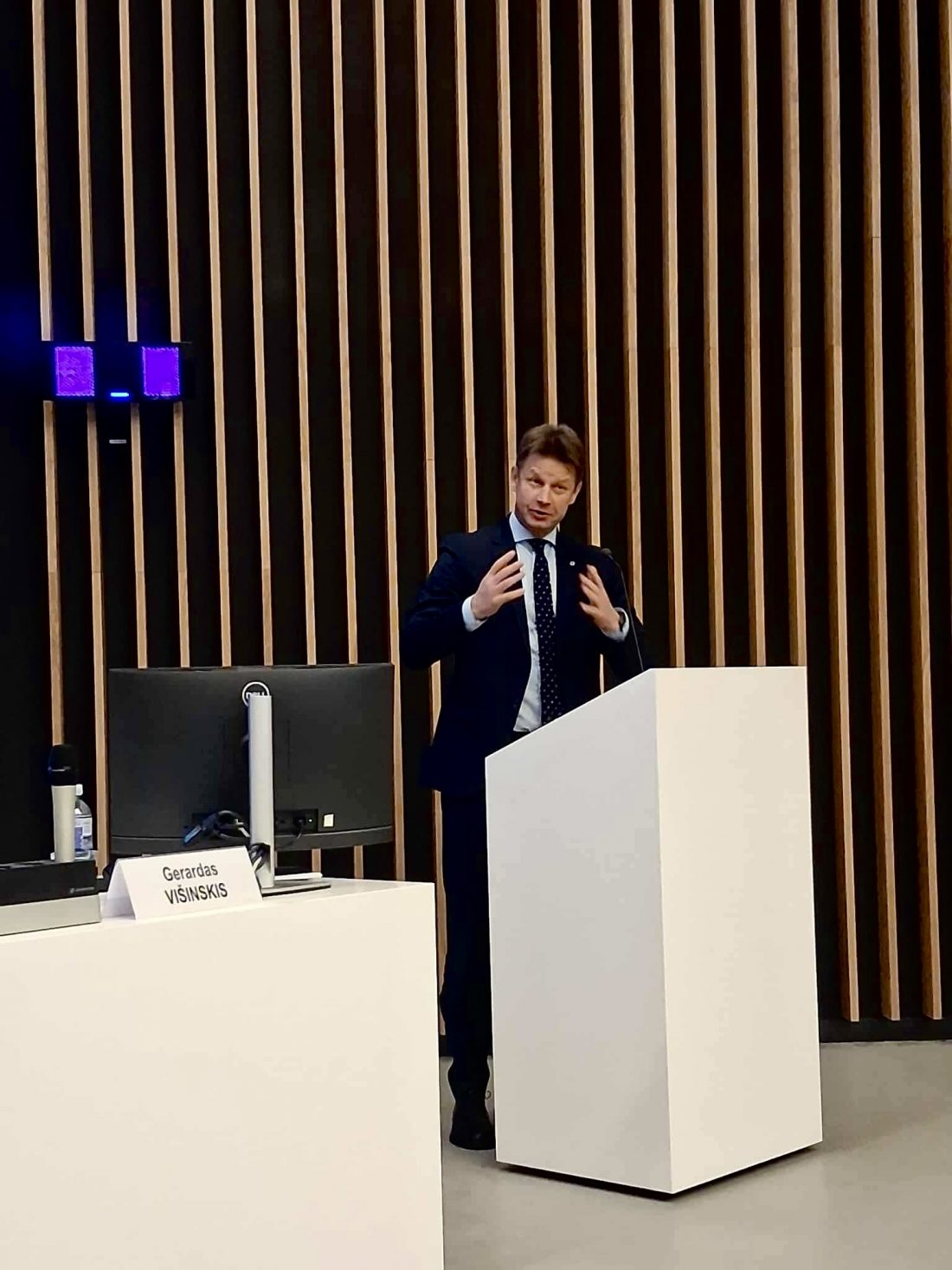
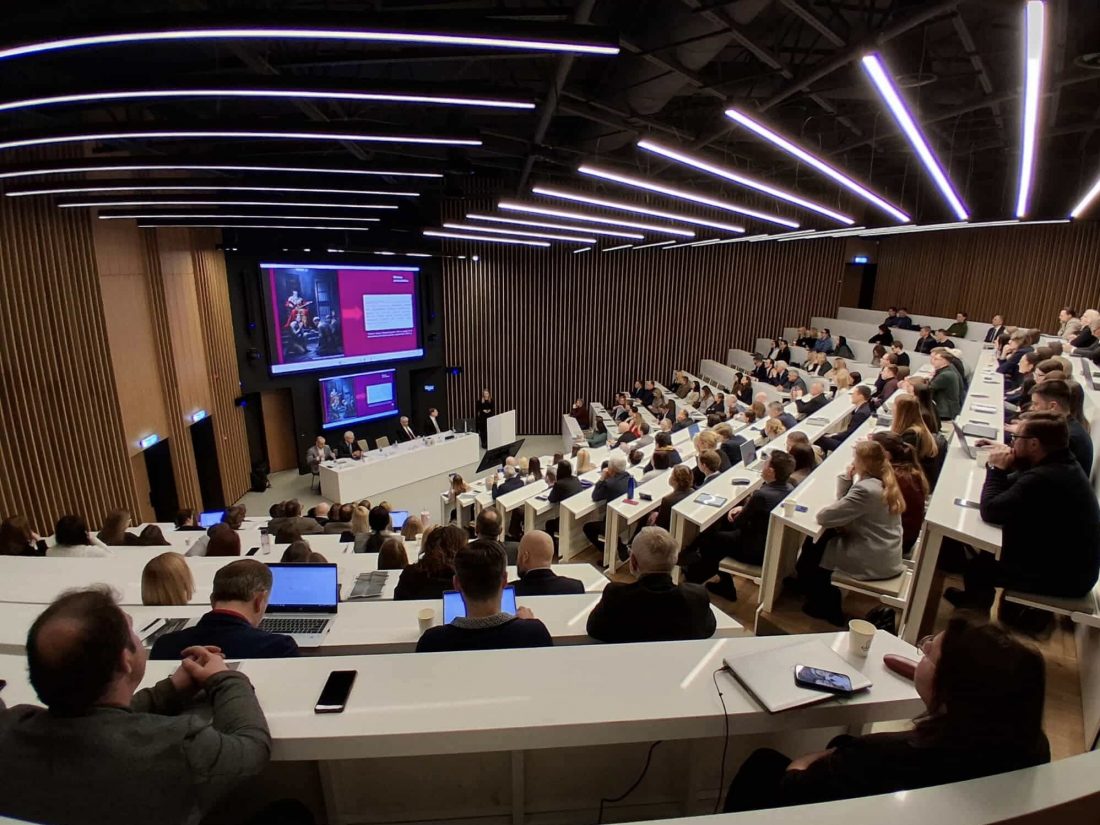
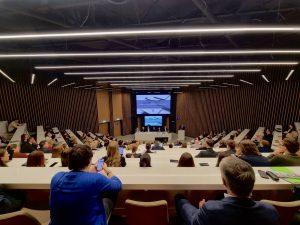
On 6 February, the Faculty of Law invited participants to the main Spring Conference of Law Science, where the Dean of the Faculty of Law, Prof. Dr. Haroldas Šinkūnas, welcomed the speakers and attendees. The conference, consisting of two parts, featured Prof. Dr. Romualdas Drakšas, who discussed issues of criminal lawmaking and practical attempts to compensate for them; Assist. Prof. Dr. Gerardas Višinskis, who highlighted legislative challenges in qualifying crimes against the person; Lecturer Marius Aidukas, who presented a perspective on whether every act of forgery deserves criminal liability; Assoc. Prof. Dr. Donatas Murauskas, who, raising the question of whether one can be punished for laughter, analysed liability related to hate speech in the context of national and ECtHR case law; doctoral candidate Goda Norvaišytė, who examined the purpose, conditions of application, and problems of parole; prosecutor Rasa Miltinytė, who presented current issues of whistleblower protection in Lithuania; Assist. Prof. Dr. Laura Šivickaitė-Moldarienė, who addressed constitutional challenges in criminal procedure; and doctoral candidate Greta Skripkutė, who, discussing the administration of justice in the procedure for issuing a criminal order, raised the question of whether a prosecutor may assume the court’s constitutional function.
We are pleased that experts from other fields also participated in the conference and delivered presentations. Forensic physician and expert Dr. Sigitas Chmieliauskas presented the problems and prospects of forensic medicine in Lithuania, while forensic expert Artur Lyskoit offered an expert perspective on new psychoactive substances and their legal assessment.
The event and discussions were moderated by Prof. Dr. Jonas Prapiestis of the Department of Criminal Justice and the Head of the Department, Assoc. Prof. Dr. Ilona Michailovič. We thank the speakers for their substantive presentations, the sharing of experience, and the lively discussions. Special thanks go to students Simona Maksimec, Laura Palubinskytė, and Simona Zubkovaitė for their smiles while registering participants. We are delighted to have welcomed over 150 conference participants from across Lithuania.