

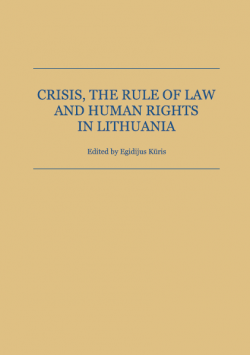
Crisis, The Rule of Law and Human Rights in Lithuania, 2015
Authors: A. Andruškevičius, I. Isokaitė, D. Kriaučiūnas, E. Kūris, G. Lastauskienė, M. Lukas, E. Masnevaitė, A. Medelienė, V. Milašiūtė, D. Petrylaitė, V. Petrylaitė, D. Pūraitė-Andrikienė, D. Žalimas
The book is based on the multifaceted research carried out by the scholars of the Faculty of Law of Vilnius University. It analyses whether (and, if so, then how) the global economic crisis, which gripped Lithuania in 2008, has altered the standards of the rule of law and human rights enshrined in Lithuanian law. Although various expectations of members of society had been perceived and protected as rights before the crisis, the latter induced the narrowing of the scope of their protection and the subsequent justification of this narrowing, as the relevant legal standards were interpreted flexibly or, at times, event not applied. Irrespective of these developments, however, the legal standards of democratic regime have been consolidated in Lithuania to the extent that their relative downgrading as a result of the crisis has not turned to the rule of law from a legal reality into an ideologeme or a slogan devoid of a real content, and the perception of a law-governed state has not been substantially undermined, so far.
The book covers the period between 2008 and 2014. It provides an extensive study on the impact of the crisis on the right to responsible government, the freedom of economic activity, the regulation of public finances (budgeting process, taxes and contributions, the supervision of banks and financial markets), social rights, political and personal rights, the independence of courts (the right to a fair trial) and the resolution of legal disputes.